May 20 - June 15, 2015
Visual Culture Research Center (Kyiv, Ukraine)
Artists:
Babi Badalov
Yael Bartana Tatiana Fedorova
Fokus Grupa
IRWIN Group
Nikita Kadan
Juan Pablo Matias
Sergey Popov
Oleksiy Radinski
Tomáš Rafa
Mykola Ridnyi
Sean Snyder
Haim Sokol
Atelier Populaires de Paris
Vova Vorotniov
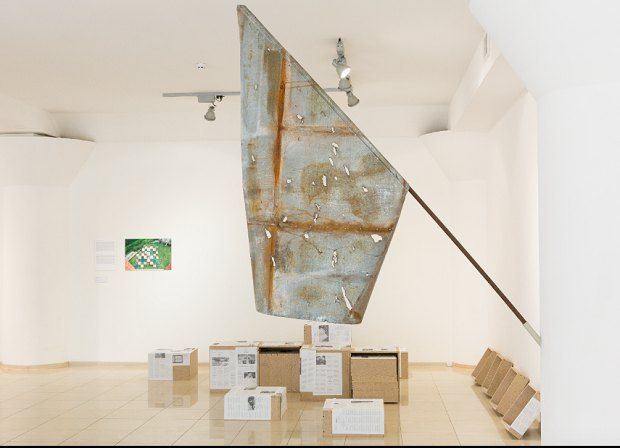
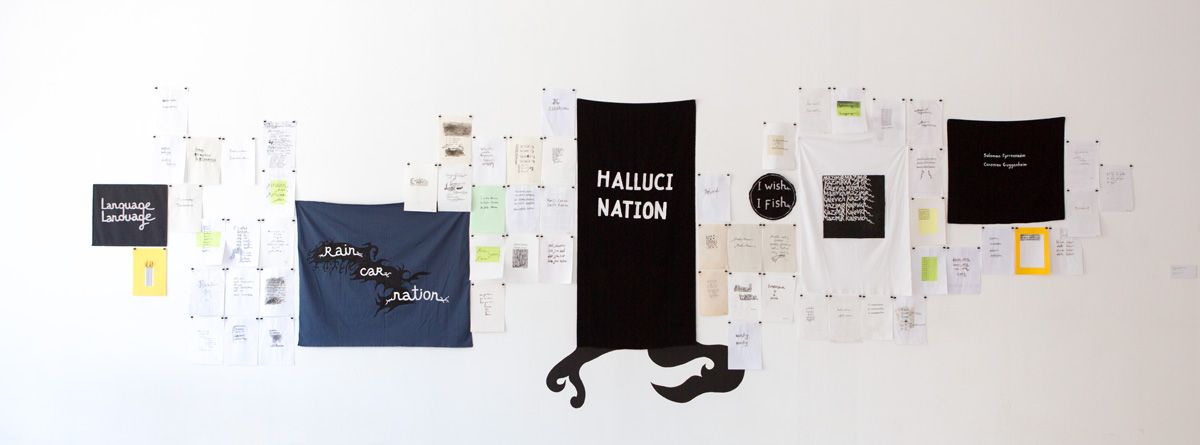
Political map of the world may be understood as a museum of collective fantasies which once gained a piece of territory where they became realized. Some of them died, failing the reality test, but continued to haunt their demesnes like specters; some ceded their spaces to other dreams; some carry out expansion, claiming new territories. However, there is also a map of an imaginary world reflecting the dreams of communities that have vanished or, on the contrary, are still emerging and keep struggling for their place in reality. After 2014, our ideas about the state, previously seen as self-obvious, have been transformed into questions. The Maidan uprising, which has been compared to a utopian republic, probed into the relations between the society and the state and generated a surge of projects calling for the latter’s transformation. Familiar contours changed before our very eyes, and the common image of the Ukrainian state is now in conflict with Ukraine’s actual borders, while hundreds of thousands of people woke up in a different country. We witnessed the implementation of political utopias enhanced by the potential of contemporary media, garnering attention on social networks and resulting in destroyed human lives. We have looked at the map of contemporary political imagination to see the routes we follow in search of common happiness, to reconsider the concepts and images underlying today’s political relations, as well as our dreams and fantasies.
May 20 - June 15, 2015
Visual Culture Research Center (Kyiv, Ukraine)
Artists:
Babi Badalov
Yael Bartana Tatiana Fedorova
Fokus Grupa
IRWIN Group
Nikita Kadan
Juan Pablo Matias
Sergey Popov
Oleksiy Radinski
Tomáš Rafa
Mykola Ridnyi
Sean Snyder
Haim Sokol
Atelier Populaires de Paris
Vova Vorotniov
Political map of the world may be understood as a museum of collective fantasies which once gained a piece of territory where they became realized. Some of them died, failing the reality test, but continued to haunt their demesnes like specters; some ceded their spaces to other dreams; some carry out expansion, claiming new territories. However, there is also a map of an imaginary world reflecting the dreams of communities that have vanished or, on the contrary, are still emerging and keep struggling for their place in reality. After 2014, our ideas about the state, previously seen as self-obvious, have been transformed into questions. The Maidan uprising, which has been compared to a utopian republic, probed into the relations between the society and the state and generated a surge of projects calling for the latter’s transformation. Familiar contours changed before our very eyes, and the common image of the Ukrainian state is now in conflict with Ukraine’s actual borders, while hundreds of thousands of people woke up in a different country. We witnessed the implementation of political utopias enhanced by the potential of contemporary media, garnering attention on social networks and resulting in destroyed human lives. We have looked at the map of contemporary political imagination to see the routes we follow in search of common happiness, to reconsider the concepts and images underlying today’s political relations, as well as our dreams and fantasies.